Behind the shutter, part 2: the true stories nobody expected
By Manfredi Miraula. Last updated: .
Three unusual finds in American self storage units, between personal stories, forgotten objects and technology resurfacing from the past.
In the first instalment of Behind the shutter we talked about finds worth a fortune, or nearly: Vivian Maier's photographs, a rare Superman comic, a James Bond car and some unreleased Michael Jackson recordings. Stories that made the news mainly for the monetary value of what unexpectedly turned up.
This time monetary value has little to do with it. The three stories we tell here, all documented, have something else in common: whoever opened that unit, or that box, had no idea what they would find inside.
First, though, a note. In the United States, when a customer stops paying for their storage, the contents of the unit can be sold at auction, following the procedures set by the law of the state where the facility is located. Behind this there may be financial difficulties, a move or a change in the family. It should also be said that what happens in America does not automatically describe what happens in Italian self storage facilities: here both the rules and the consequences of non-payment depend on the law and on the contract signed with the facility.
Three self storage finds that made the news
North Carolina, 2007: an amputated leg inside a smoker
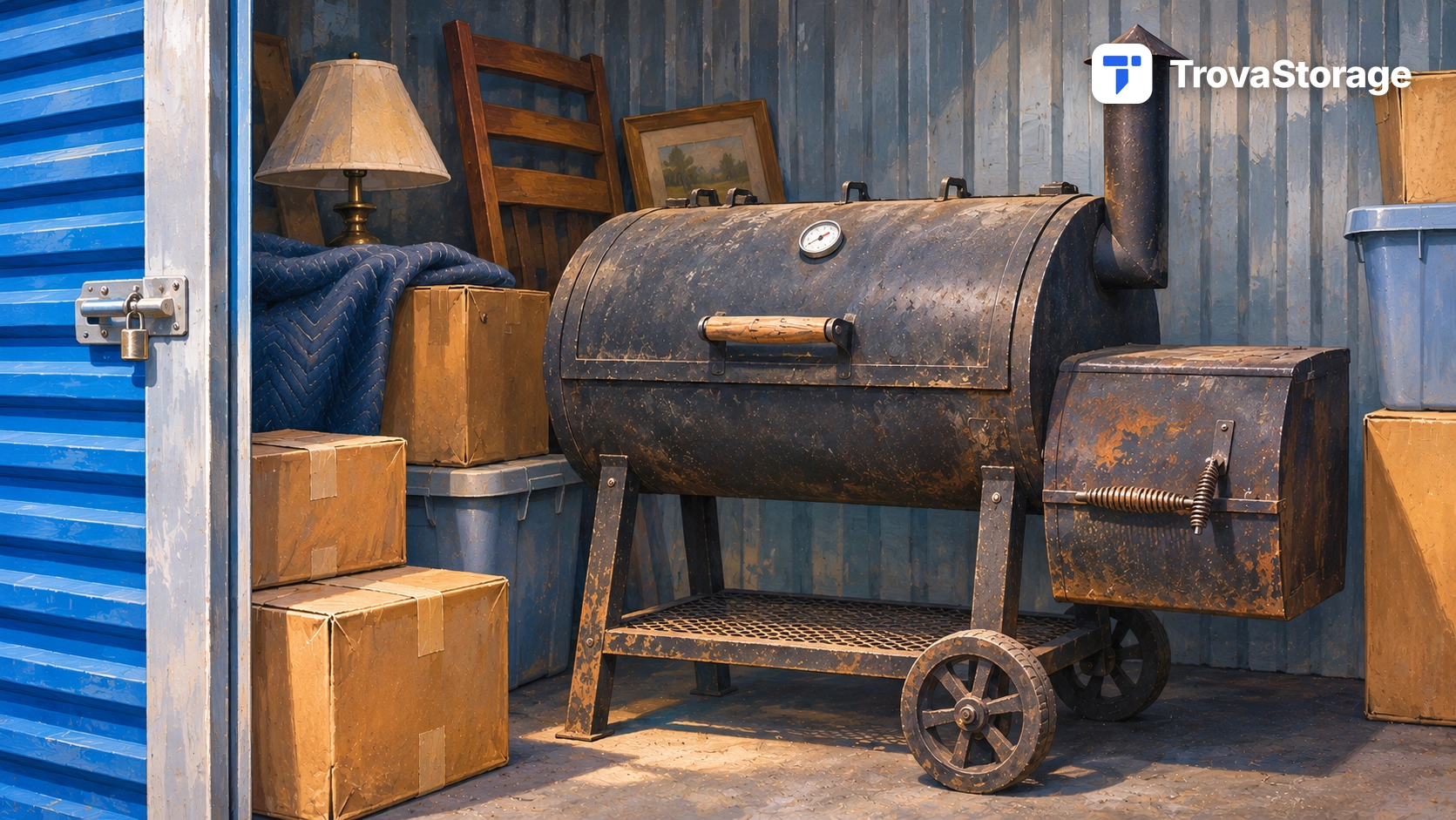
In 2007, in Maiden, North Carolina, Shannon Whisnant bought a barbecue smoker that came from a storage unit sold at auction. When he opened it, he made a discovery that is hard to believe: inside he found an amputated human leg!
It later emerged that the leg belonged to John Wood, who in 2004 had survived a plane crash in which he also lost his father. After the amputation he had asked to keep the limb, which he had placed in the smoker and left in a storage unit along with other things.
The American authorities stepped in, and the story did not end there. Whisnant, the new buyer, claimed that the smoker (contents included!) was his, and tried to gain a bit of fame from the discovery. Wood, the former owner, wanted instead to get back something he cared about for deeply personal reasons. The dispute ended up in the American media and on television, and years later became Finders Keepers, the documentary presented at the Sundance Film Festival in 2015 which, besides the clash between the two men, tells of the personal difficulties both were carrying [1].
What for a buyer was an inexplicable find (and a macabre one, I would add), for the owner was a part of his own life. And it is this, more than the strangeness of the discovery, that makes the story worth telling.
Florida, 2012: a former medical examiner's storage unit
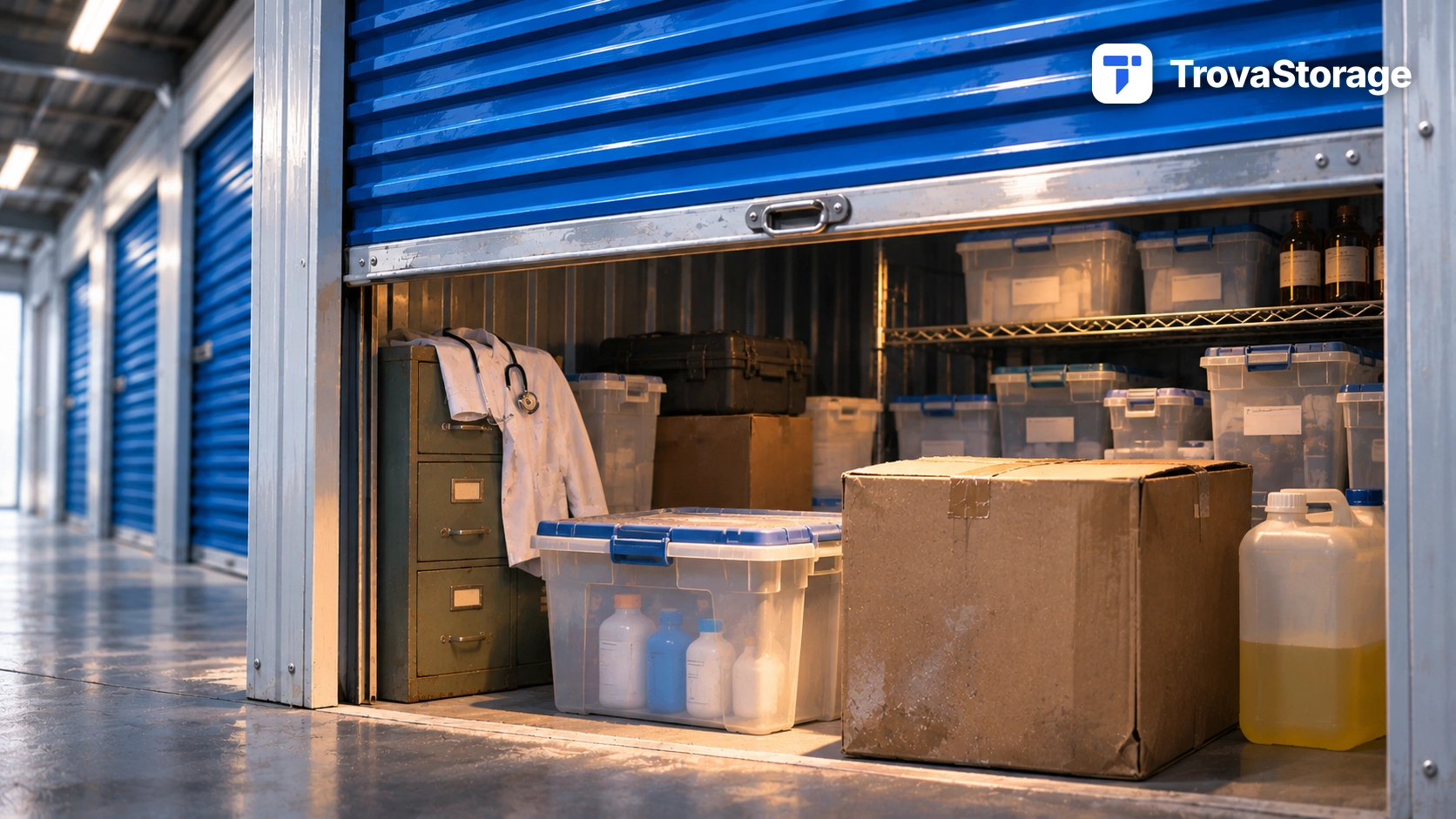
In August 2012, in Pensacola, Florida, the contents of a unit were sold at auction for non-payment. The buyer began going through the furniture and boxes, until he noticed a strange smell coming from some containers. Inside were human organs and anatomical specimens, in more than a hundred containers [2].
The unit had been rented by Michael Berkland, a former medical examiner who had worked in the area. According to the authorities, the materials came from autopsies carried out in previous years; some were in unsuitable containers, together with chemicals used to preserve tissue. In September Berkland was arrested and charged with, among other things, improper storage of hazardous waste, while the authorities worked to identify the remains and trace the families [2].
Beyond the shock, the story is a reminder of something simple: you cannot put just anything in a storage unit. Each facility sets out what is allowed and what is not in its contract and rules, and on top of these come the rules of ordinary law, because the safety of the staff and of everyone who uses the facility is essential.
November 2026: an Intel prototype resurfaces from a storage unit
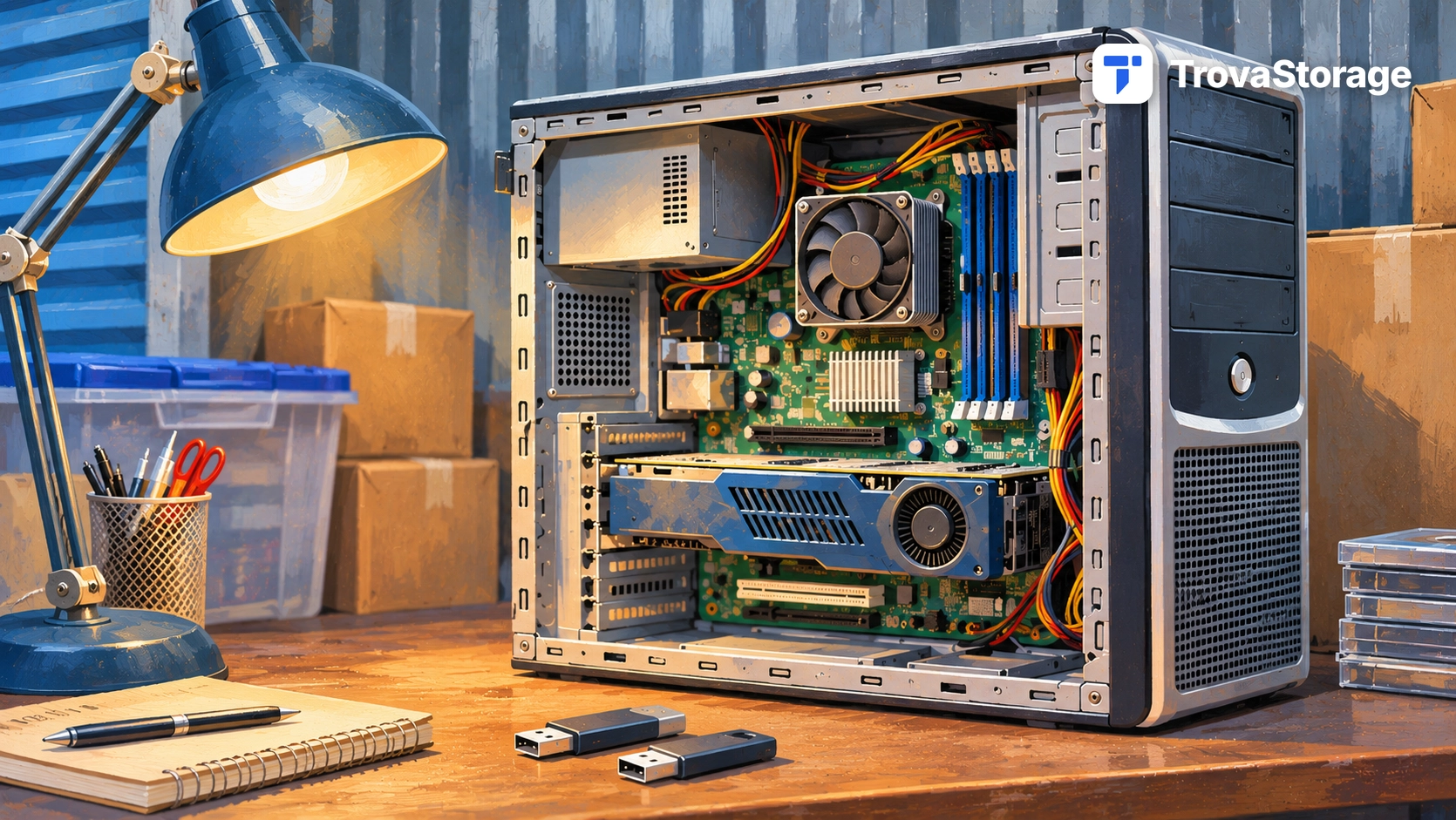
In early November 2026 several technology outlets reported the discovery of an Intel Larrabee development system, bought at auction with the contents of a storage unit. To look at, it seemed like any old computer; inside, however, was an experimental system called Intel Visual Adrenaline, built specifically to work on Larrabee.
In the late 2000s Intel had bet on Larrabee to offer a new solution for graphics processing, but the product never reached the market in the planned form. The system found included an Intel motherboard, a Larrabee prototype and a diagnostics card. The most interesting piece, though, was a pair of USB sticks with the original software and drivers.
According to the buyer's account, reported by TechPowerUp [3] and Hardware Busters [4], the recovered software made it possible to restart the system and even run Crysis, the video game that at the time pushed most computers to their limits. For enthusiasts it was a rare chance to see a long-inaccessible technology at work.
Some questions remain open: Intel has not officially confirmed the circumstances of the find, and we do not know how the system ended up in a storage unit. Its value, commercial and otherwise, as evidence of a project that never reached the finish line, remains intact, however.
When objects hold memories and personal stories
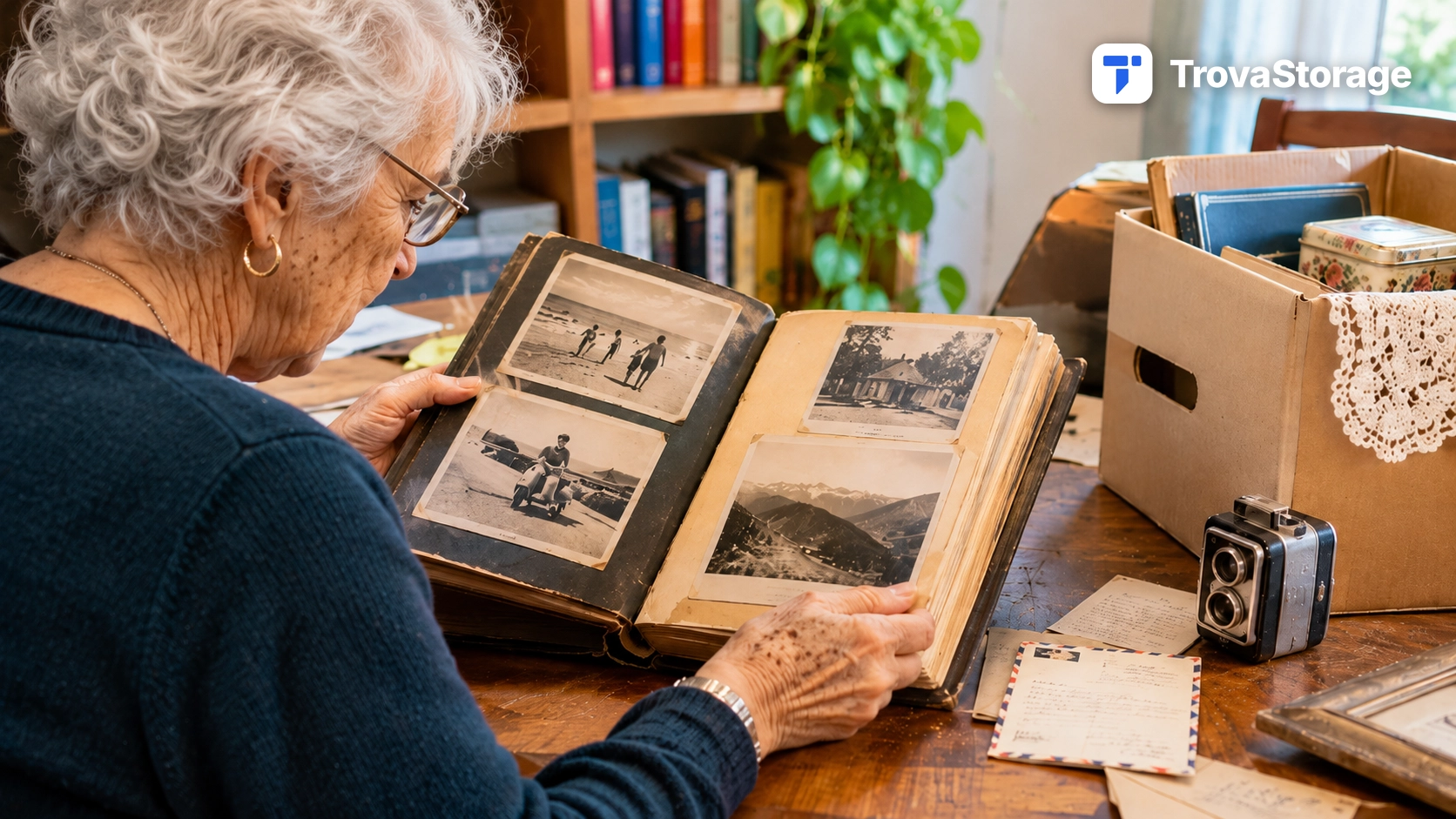
A forgotten prototype tells a piece of the history of technology. A smoker, as we saw in North Carolina, can tell a "piece" of a person's life, even if it is an extreme and bizarre story.
Just look around your home: the photo albums, the letters, the toys from when we were children, that thing inherited from a grandparent that we never had the heart to give away. To a stranger they are ordinary objects, sometimes just bulky ones. To the people who own them they are people, places, pieces of life.
It is a bit like what happened with Vivian Maier, the photographer we talked about in the first instalment. Besides her huge archive of photographs, Maier left many personal belongings, and in 2025, in Chicago, some of them went to auction: hats, clothes, costume jewellery. Not all of them came from the 2007 auction that had started the rediscovery of her photos. According to WBEZ Chicago [5], John Maloof had received some of them from a family the photographer had worked for, just as a storage unit holding her belongings was being cleared. They were objects that showed a side of her that the photographs do not tell: her habits, her tastes, her little quirks.
And then there is something that sooner or later happens to everyone: not knowing straight away what to do with the things we are left with. During a move, after a separation or when a family member dies, sometimes all you need is to put them aside for a while and postpone the decision until you feel ready. A storage unit can help with this too, as long as you use it with a little care.
Storing belongings without losing track of them
The American stories are exceptional cases. In everyday life the difficulty is much more practical: remembering what you put in the unit and keeping everything in order.
If you rent a storage unit during a move or a renovation, it helps a lot to write a description of the contents on the boxes, photograph the most fragile items and keep the information you will need to find them. If you move house, remember to update the contact details you gave the facility. And before signing, clarify the contract length, renewal, deadlines and how to cancel, without assuming that the terms are the same everywhere.
It is also worth checking what you are allowed to bring. Hazardous materials, flammable substances, perishable food and other goods may be prohibited or restricted, so read the facility's rules first. For original documents, cash and very valuable items it may make sense to consider other forms of safekeeping. Storage conditions, security measures, access hours and any insurance cover also vary from one operator to another.
If you need to find storage for your furniture, describe to the advisor what you intend to store: the items that can be dismantled, any fragile belongings, how long you need the space and how often you expect to access it. The facility will assess the right space and send you a personalised quote, with the total price and any additional costs. On TrovaStorage.it you can search for self storage facilities in the area you are interested in and send a free, no-obligation request for advice and a quote to up to three facilities; the operators will reply directly, with availability and the terms of the service.
One question remains that we have only touched on: how do auctions of abandoned units really work, and how closely do they resemble the ones you see on television? We will talk about it in the third and final instalment of Behind the shutter, starting from the much-told story of a safe that supposedly held a fortune, and ending with what can happen in Italy.
Sources
- Sundance Institute, Finders Keepers: The Battle Over a Human Limb (2015).
- Associated Press / CBS News, Human Body Parts Found in Florida Storage Unit (28 August 2012) and Dr. Michael Berkland Arrested for Storing Human Body Parts (10 September 2012).
- TechPowerUp, Intel "Larrabee" GPU System Surfaces with Working Drivers (2 November 2026).
- Hardware Busters, Intel Larrabee Dev Kit Found in a Storage Unit Runs Crysis With Its Original Drivers (2 November 2026).
- WBEZ Chicago, Trove of Items from Renowned Photographer Vivian Maier Up for Auction (30 September 2025).